Neutral Sans Workhorse
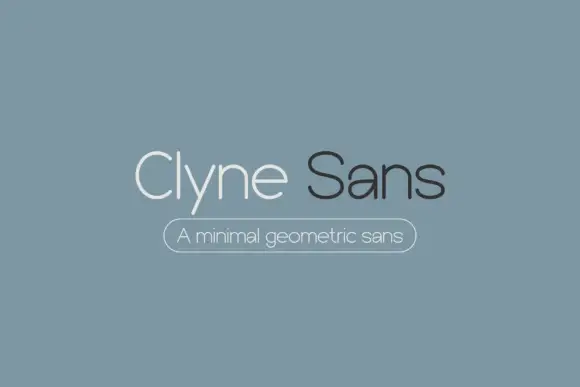
Pixel Wonder + Clyne Sans
Lets Pixel Wonder own the focal silhouette while handling secondary copy, sizing and subheads cleanly.
Inspect Clyne Sans specimenDisclosure: MakerFileHub may earn a commission from qualifying purchases via paid links on this page. How our links work.
Outlined 8-bit sandbox & retro-arcade pixel block font
Pixel Wonder is an authentic, grid-locked 8-bit pixel block font framed by crisp stepped black pixel outlines for instant sandbox-game nostalgia.
Paid link
Get this fontProject & layout blueprintsAt-a-glance maker compatibility
Sturdy stroke walls and open counters weed cleanly on adhesive vinyl, HTV apparel film, and cut cardstock.
Visual anatomy & craft review
Pixel Wonder is an outlined eight-bit pixel block font: every letter is built from square pixels on a fixed lattice with a hollow interior and a black contour around the outside, so a word reads as a stamped screen rather than a filled bitmap. The lattice means the face only works at whole multiples of its pixel size, and the outline closes first. It needs roughly 26 mm for the contour and the pixel step to read, and it is best in two inks on white, or one ink plus a knocked-out interior on black for a screen look.
8-bit · Blocky · Gamer
Two-font hierarchy recipes
Tested contrast partners — pairing Pixel Wonder with grounded secondary typography.
Pixel Wonder + Clyne Sans
Lets Pixel Wonder own the focal silhouette while handling secondary copy, sizing and subheads cleanly.
Inspect Clyne Sans specimen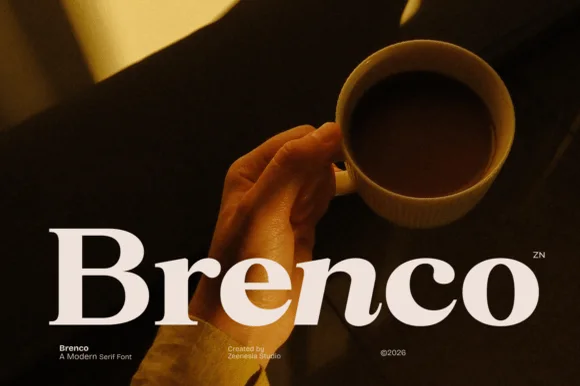
Pixel Wonder + Brenco
Grounds bold display lettering with classic typographic authority on posters, badges and apparel.
Inspect Brenco specimenPractical applications
Concrete hierarchy, scale and production guidance tailored to Pixel Wonder’s stroke geometry.
An outlined pixel font sets a retro games party in the lettering itself, so the invite needs no cabinet graphic. The contour holds at 40 mm, and two inks print the invite and the wraps as one set.
Hierarchy & layout recipe
Invite A6, word 40 mm on a whole-pixel scale, details 8/11 pt, 12 mm margins. Topper 130 x 110 mm, word 44 mm with a 6 mm stick slot and 12 mm clear. Cup wrap 200 x 90 mm, word 20 mm, 12 mm from the rim.
Pre-production check
Scaled to 40 mm the pixel blocks land at 1.6 mm and the contour prints with uneven steps that look like a broken file. Scale in whole multiples or use the native size, and check one invite with a loupe.
An outlined pixel font reads as a screen rather than a printed banner, which is what a computing room wants above its desks. The hollow interior keeps the display light at 120 mm, and two inks print the display and the labels in one pass.
Hierarchy & layout recipe
Display 1200 x 400 mm, letters 160 mm on a whole-pixel scale, 20 mm margins. Key label 25 x 25 mm, word 6 mm, 2 mm margin. Certificate A5 landscape, word 28 mm, 12 mm margins.
Pre-production check
A 25 x 25 mm key label at 6 mm drops below the pixel lattice and the letter reads as noise. Use the solid cut on key labels and keep the outline for the display, then check one label on the keyboard.
An outlined pixel font reads as a screenshot rather than a styled headline, which is what a feature about early arcade design wants. The hollow interior keeps the title light, and the lattice aligns to the pixel grid of the captures below.
Hierarchy & layout recipe
Opener 210 x 297 mm, title 48 pt on a whole-pixel scale, standfirst 11/15 pt, body 9/13 pt, 18 mm margins. Captions 8/11 pt. Tab 30 x 90 mm, word 8 mm.
Pre-production check
At 8 mm on the tab the lattice falls below native size and the tab icon reads as a grey smudge. Keep the face to the opener and captions at 10 pt, and proof one page at 1:1.
Technical & licence verification
Confirm included OTF/TTF/WOFF formats, full glyph tables and licence coverage on the live store page before batch production.
Closest visual alternatives
Matched across letterform anatomy, stroke behaviour and craft applications.
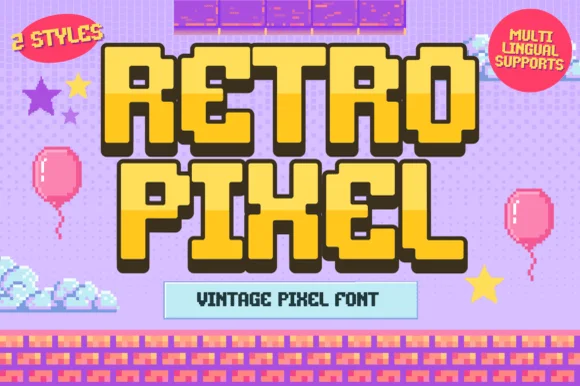
2-style 16-bit platformer video-game pixel font (Multilingual)
Retro Pixel is a cheerful 2-style retro platformer pixel font with multilingual character support and chunky 16-bit adventure charm.
Ideas for this font
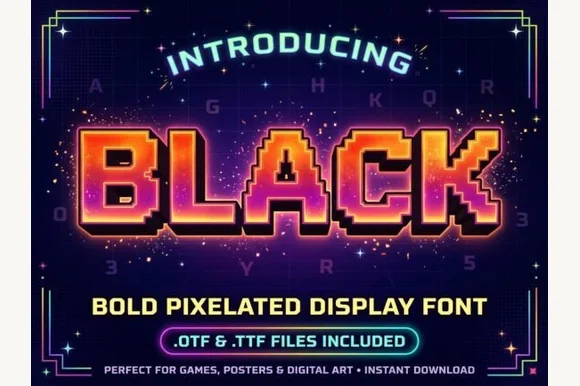
Heavy 16-bit arcade boss-screen pixelated block font (OTF & TTF)
Black (by Bluebird) is a chunky, heavy-weight pixelated arcade display font built from bold stepped 8-bit/16-bit square blocks (OTF & TTF).
Ideas for this font
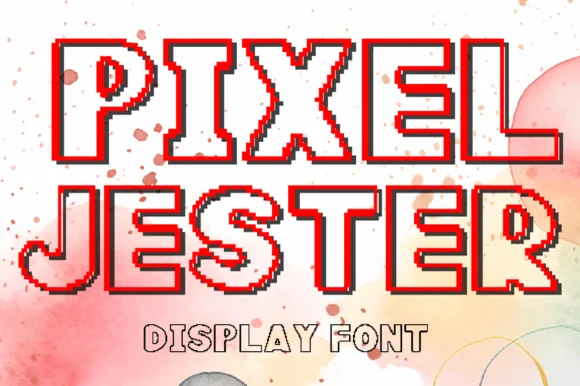
Pixel outline display with a stepped shadow
Pixel Jester is a pixel outline display in red and black on a watercolour splash: capitals drawn as a stepped outline with the paper showing through, each letter shadowed by a black pixel offset, with a solid line beneath in the same face.
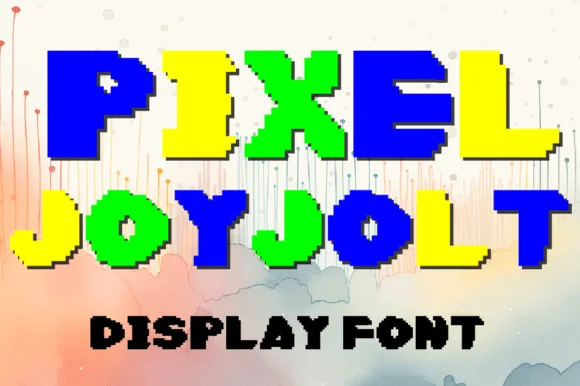
Pixel display in three flat colours
Pixel Joyjolt is a pixel display face in blue, yellow and green on a soft painted ground: chunky capitals assembled from square pixels with a fine white keyline, set as two stacked lines with a small black line beneath.
Ideas for this font
Same independent foundry
Allow optional Google Analytics to measure visits and catalogue actions. Your search words and notes are not included. Privacy & storage